Stay Active This Ramadan


Stay Active This Ramadan
Ramadan is a special and meaningful month observed by Muslims around the globe. It is a time of fasting from dawn till sunset, along with self-reflection, self-discipline and creating a connection within the community. While the focus is on the spiritual growth during the month, we must not forget that it is also important to look after your physical health and wellbeing during this period. It is important to maintain a balanced lifestyle with help of healthy nutrition and suitable exercise which can support both physical and mental wellbeing during Ramadan.
Choosing the right foods during Suhoor and Iftar plays an important role in maintaining energy and hydration during the day.
- Complex carbohydrates such as oats, whole grains, brown rice and wholemeal bread can help provide slow realising energy.
- Lean proteins like chicken, fish and eggs can help maintain muscle strength and keep you away from feeling the urge to eat for a longer period.
- Intake of fruits and vegetables can provide with essential vitamins, minerals and hydration.
- Plenty of fluids especially water, should be consumed between Iftar and Suhoor to prevent dehydration.
While many foods can help support energy, hydration and overall health during Ramadan, it is equally important to be mindful of foods that may negatively affect energy levels and hydration.
- Highly processed or fried foods can cause tiredness very quickly.
- Sugary drinks and desserts may provide quick energy, but they often lead to energy crashes.
- Excessive amount of caffeine may contribute to dehydration and disrupt sleep patterns.
- Salty foods can increase the levels of thirst during your fast.
Maintaining balanced nutrition helps improve your energy levels, supports exercise performance and assists recovery during fasting

Physical activity during Ramadan can be beneficial but choosing the right time and intensity for yourself is important.
Exercising Before Iftar
Benefits:
+ Allows individuals to exercise closer to the time they can rehydrate and refuel.
+ Can help maintain consistency in fitness routines.
+ Often suitable for low-intensity workouts such as stretching, mobility work, or light resistance training.
Drawbacks:
- Increased risk of dehydration and fatigue due to fasting.
- Energy levels may be lower, which can affect performance.
Exercising After Iftar
Benefits:
+ The body is rehydrated and refuelled, allowing for better strength and endurance.
+ Reduced risk of dizziness or fatigue.
+ Suitable for slightly higher intensity workouts if done sensibly.
Drawbacks:
- Exercising immediately after eating may feel uncomfortable.
- Late workouts may affect sleep quality it done too close to bedtime.
Listening to your body and choosing a comfortable time to exercise is key to maintaining a safe and effective routine.
How to get Involved
Working out at home during Ramadan is a simple and effective way to stay active while respecting your energy levels and fasting schedule. Low-intensity workouts are ideal during this time, helping you maintain strength, mobility, and overall wellness without feeling exhausted. The best part is that no equipment is needed - you can rely on body weight exercises like squats, lunges, light core work, and stretching to keep your body moving. To make it even easier, our KAL app offers guided workout videos that you can follow at your own pace, right from the comfort of your home. Just look for the 'Your KAL' tile on the KAL app to access these classes for FREE! Whether it’s before iftar or a little while after, these gentle sessions are designed to support your fitness journey throughout Ramadan.
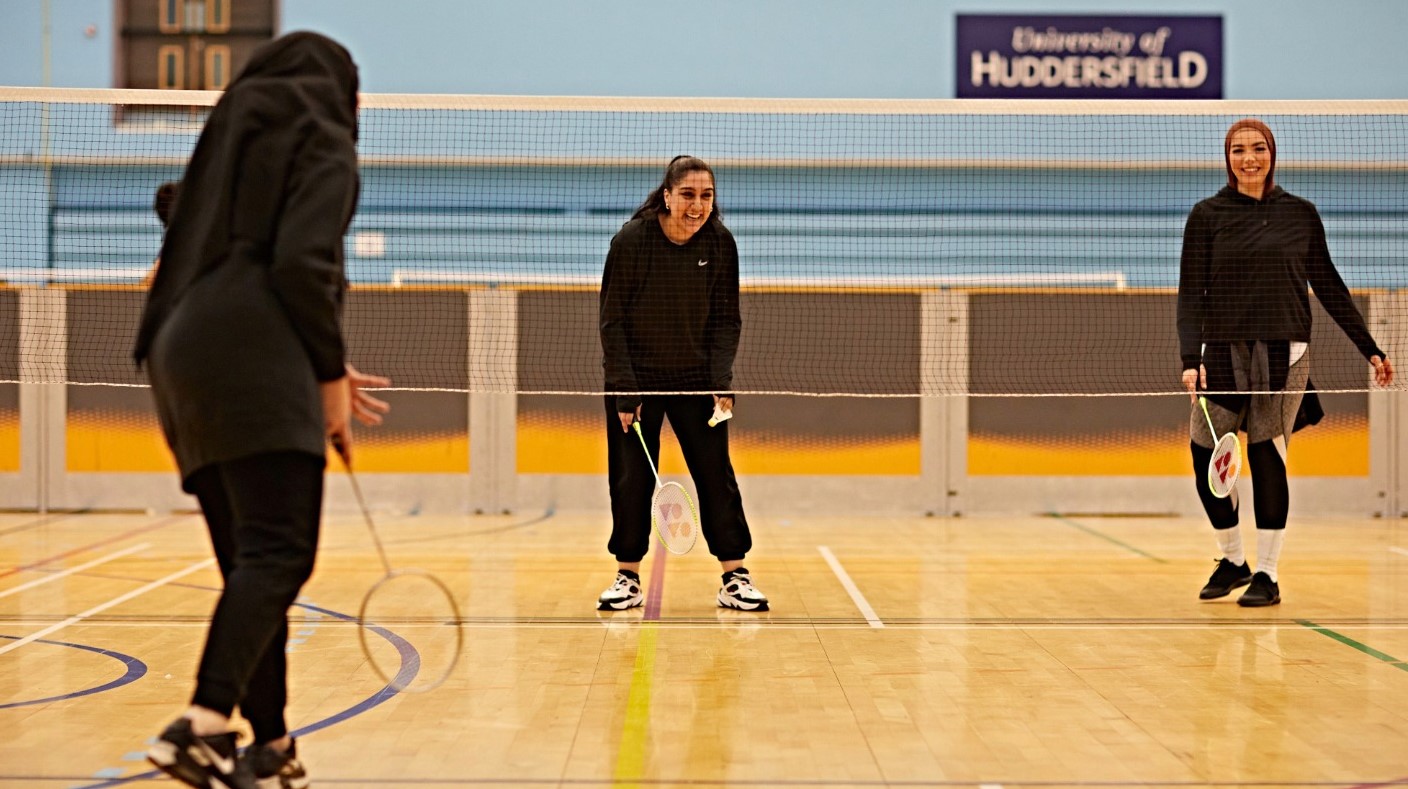
ActiveHud offers free social sports like social cricket, social badminton, and social table tennis, which can be especially beneficial during Ramadan. These activities provide a light and enjoyable way to stay active without overexerting yourself while fasting. Social sports focus more on fun and connection rather than intense competition, making them perfect for maintaining movement and energy at a comfortable pace. They also create a great opportunity to socialize, reduce stress, and build a sense of community during the holy month. Participating in these free sessions helps you stay physically active and mentally refreshed, all while balancing your Ramadan routine.
Low to moderate intensity activities are highly recommended during Ramadan as they help maintain fitness without placing excessive stress on the body. Activities such as wellbeing walks light jogging, swimming, stretching, and mobility exercises offer several benefits:
- Help maintain cardiovascular health
- Support muscle strength and flexibility
- Improve mood and reduce stress
- Promote better sleep quality
These activities are generally safer during fasting periods and can easily be adapted based on individual fitness levels and energy availability.
Ramadan is not only a time for spiritual growth but also an opportunity to build healthy and sustainable habits. By maintaining balanced nutrition, staying hydrated, and participating in appropriate physical activities, individuals can support their overall wellbeing while observing their fast.
ActiveHud Ramadan Focussed Activity Timetable
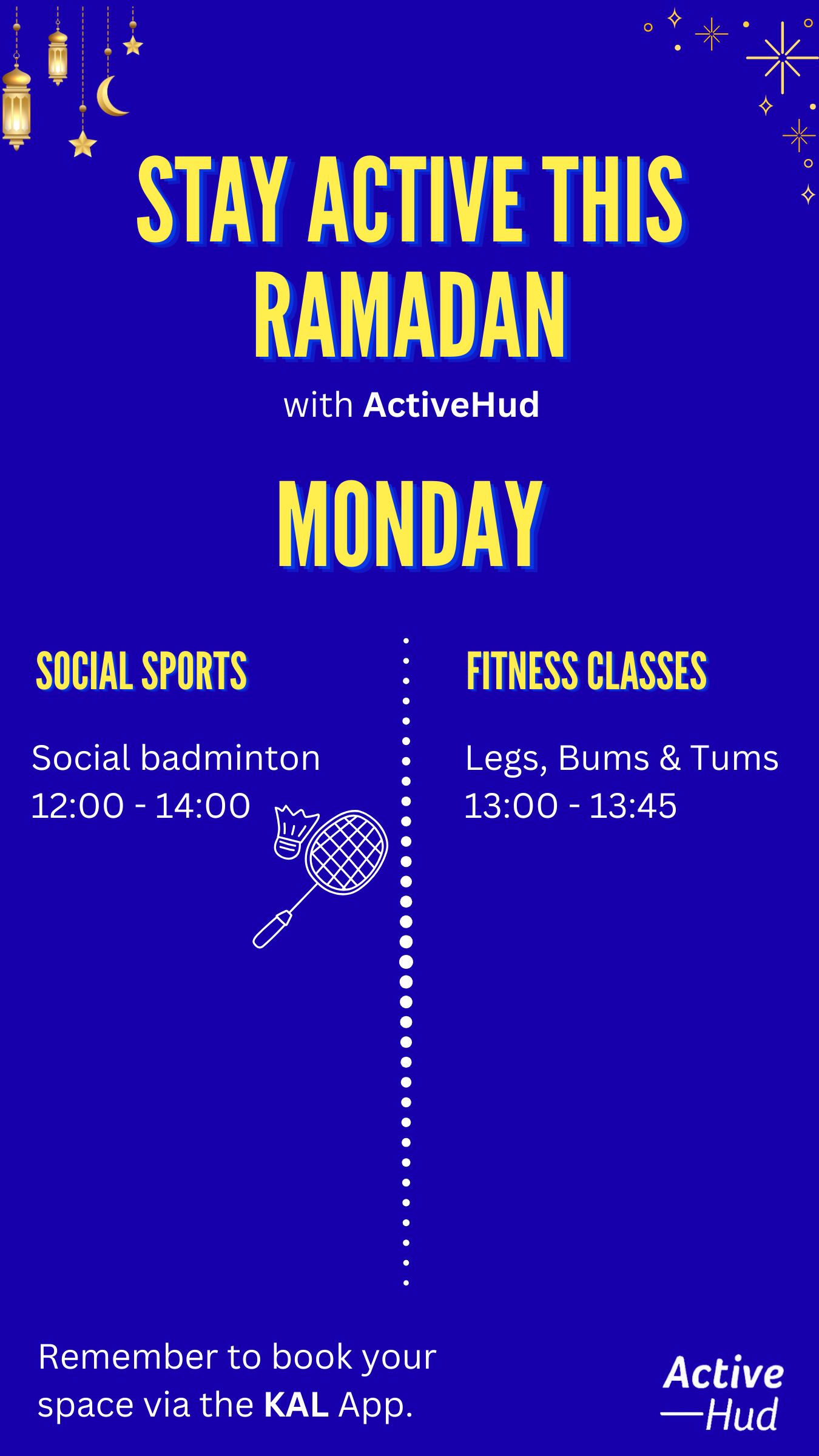
Stay Active This Ramadan - Monday
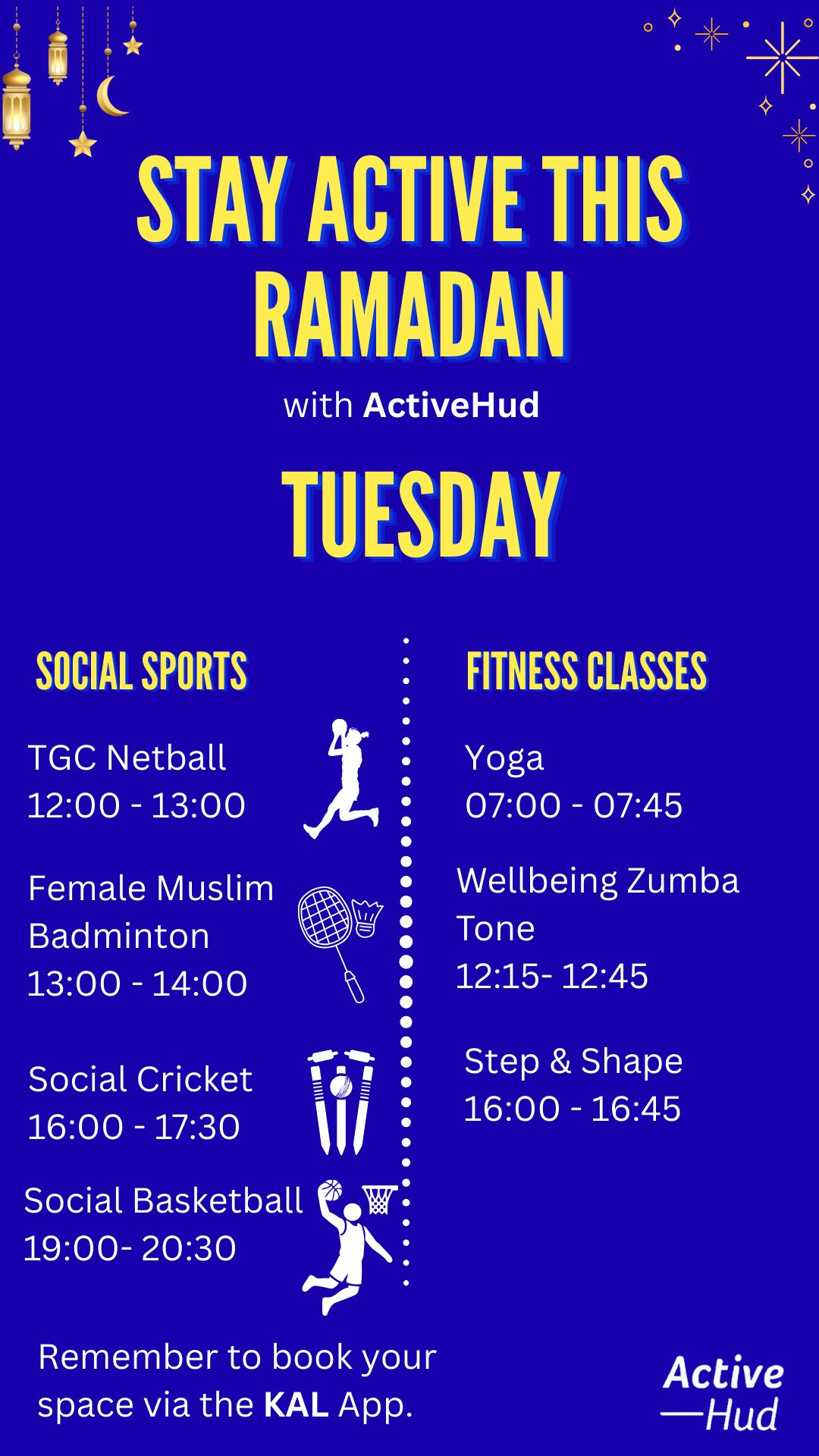
Stay Active This Ramadan - Tuesday
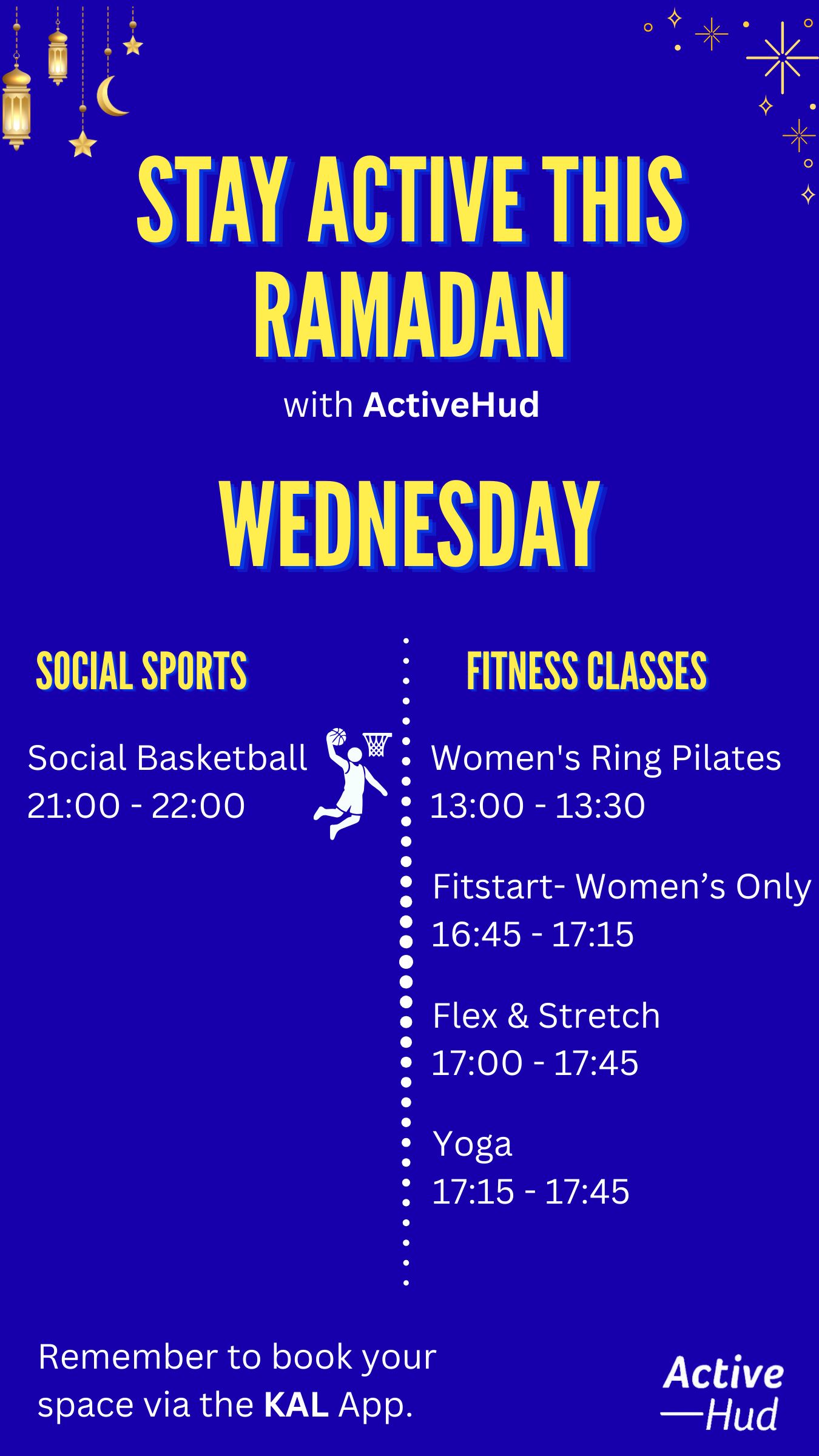
Stay Active This Ramadan - Wednesday
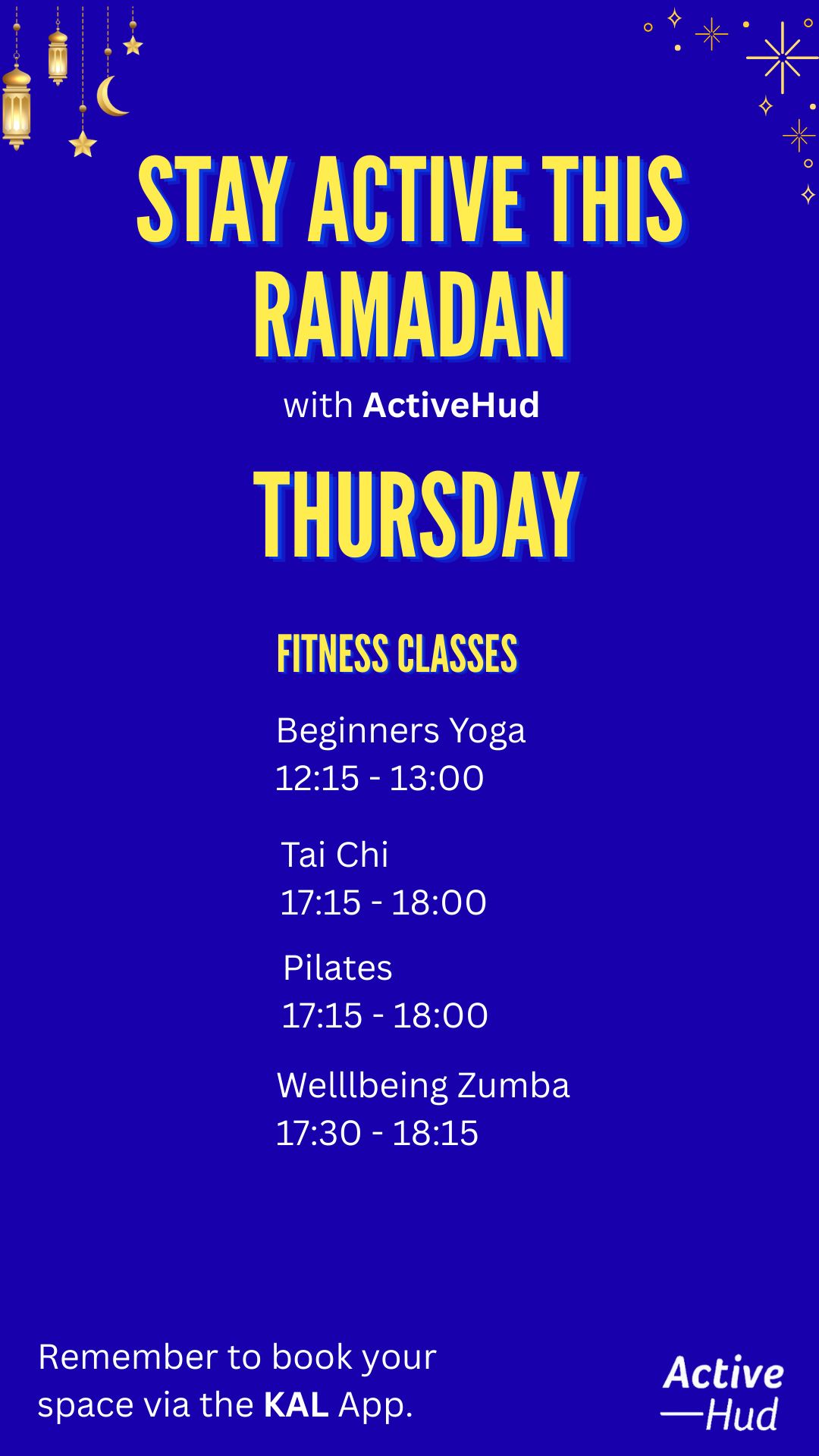
Stay Active This Ramadan - Thursday
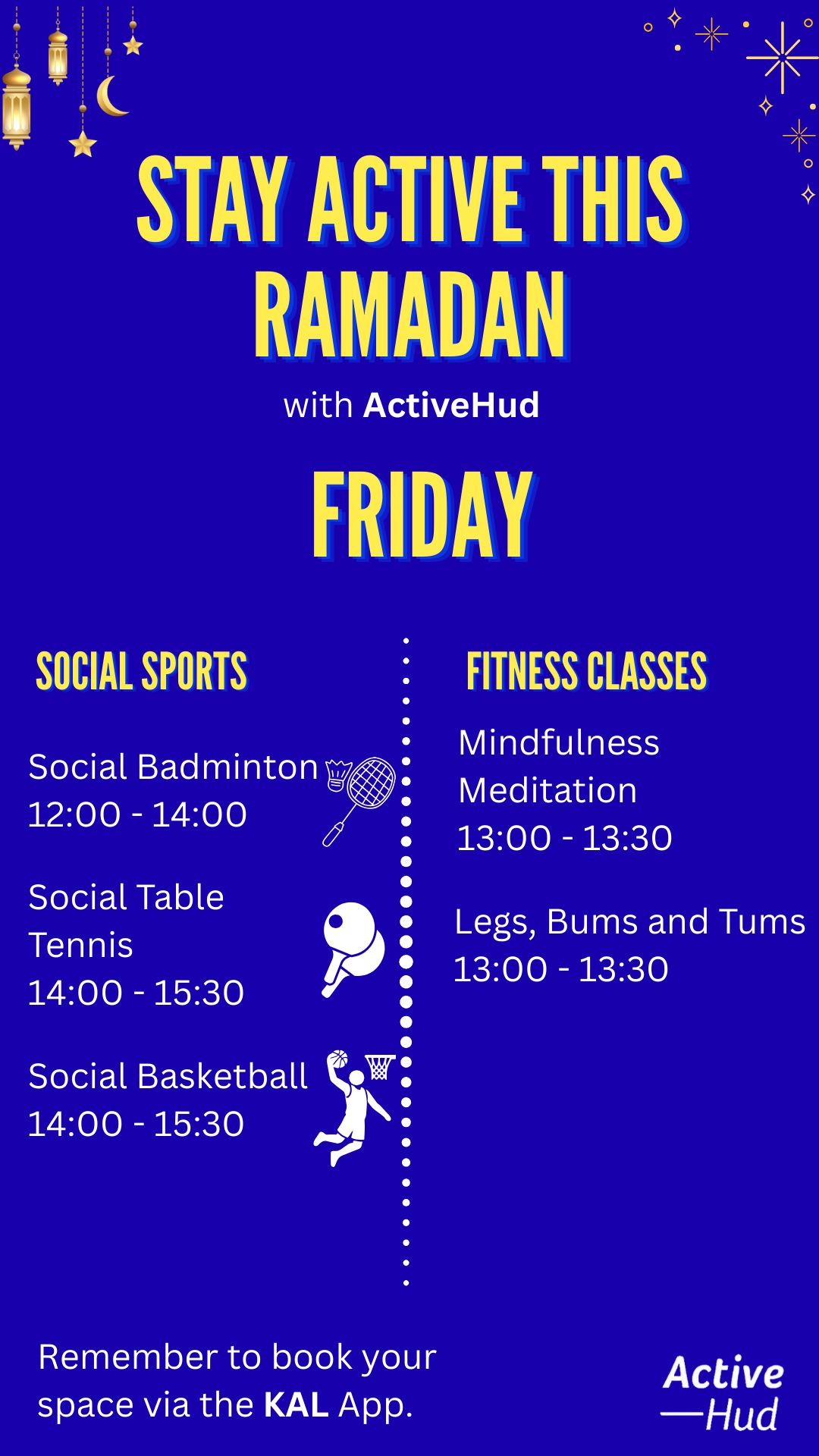
Stay Active This Ramadan - Friday